How to reduce no-shows without chasing every customer
No-shows rarely happen out of nowhere. Here is how booking businesses can prevent empty slots with clearer timing, quick approvals, and better follow-up.
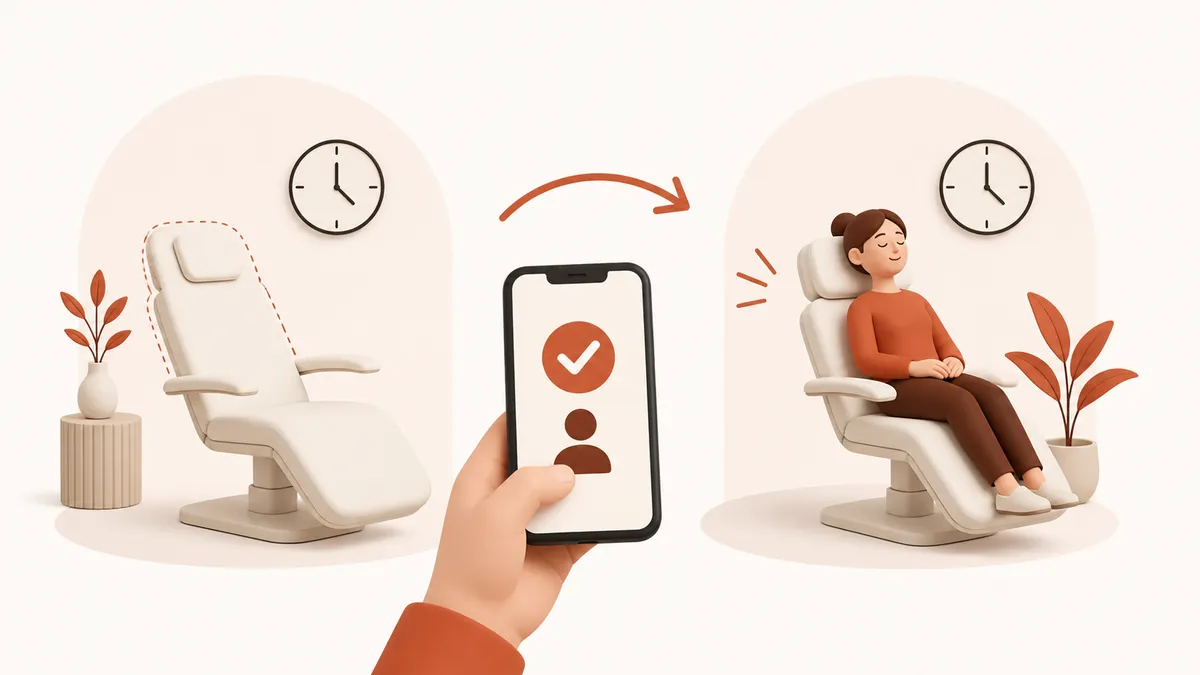
No-show problems usually do not begin with a rude customer. They begin earlier, in small moments that feel harmless at the time. A booking gets made late on a Sunday night. The confirmation is vague. The customer forgets where they booked. A busy Tuesday rolls around, and the empty slot is yours to absorb.
For salons, clinics, studios, cafes, and restaurants, that lost hour is not a small inconvenience. It is revenue you cannot get back. The good news is that most no-shows are not random. They follow patterns, which means they can be reduced with a calmer, clearer booking process.
No-shows often start as uncertainty
When a customer misses an appointment, it is easy to call it carelessness. Sometimes it is. More often, the booking never felt fully settled from their side. They may have sent a message, waited for a reply, and half-assumed the time was theirs. Or they booked in a rush and could not find the details later.
That uncertainty is where no-shows grow.
The businesses that keep no-shows lower tend to make the next step obvious straight away. A request comes in. It gets approved quickly. A confirmation arrives with the time, date, and enough detail for the customer to trust that the appointment is real.
People are more likely to show up when the booking feels settled, not vague.
Fast approval makes the booking feel real
Think about a client booking a haircut during their commute home. They tap a time on their phone between train stops and move on with their day. If that request sits unanswered for hours, the booking feels provisional. They may keep looking elsewhere or forget about it entirely.
Now picture the same moment with a quick approval flow. The request lands on your phone while you are between appointments. You confirm it with one tap. The customer gets an email before they even put their phone back in their pocket.
That speed matters because it removes doubt. Instead of “I think I asked for Thursday at 4,” the customer is thinking, “I am booked for Thursday at 4.”
In practical terms, a faster approval flow helps you:
- stop duplicate requests made to multiple businesses
- reduce “I wasn’t sure it was confirmed” misunderstandings
- fill your calendar with bookings that feel definite from the start
Clear confirmations do more than send the time
A confirmation email is not just admin. If the message is clean and immediate, it becomes the receipt in the customer’s mind that says, “This appointment exists.”
That matters when customers book days or weeks ahead. A facial booked on Monday for the following Saturday can easily drift out of mind if the only record lives in a chat thread.
Good confirmations are simple. They answer the few questions a customer is most likely to forget:
- What did I book?
- What time do I need to be there?
- Where is it?
- Did this actually go through?
You do not need a complicated process. You need the details to arrive fast and in writing.
Friction-free booking helps the right customers commit
Sometimes businesses accidentally create no-shows by making the booking process too loose at the start and too messy at the end. A customer sends a DM, you reply two hours later, they answer the next morning, and by then the slot has been mentally downgraded by both sides.
Online booking works better because it reduces those fuzzy edges. The customer chooses from real availability. You review the request. Everyone is looking at the same version of the day.
That matters in small, ordinary scenes:
A Sunday night booking is different from a lunchtime call
A Sunday night booking usually happens when someone is planning the week ahead from the sofa, half-thinking about school runs, work, or errands. They are not in conversation with you. There is no receptionist repeating the details back. If the process does not confirm the appointment clearly, it is much easier for it to slip.
A tidy booking page, one approval step, and an immediate confirmation turn that late-night impulse into something concrete.
Patterns tell you which bookings need extra attention
Not every customer behaves the same way. Some always arrive early. Some cancel properly. Some disappear without a word. If your booking system keeps customer history in one place, you can stop treating every appointment like a blank slate.
Over time, patterns become useful:
- repeat no-shows are easy to spot
- last-minute cancellations stop feeling random
- busy days and risky time slots stand out more clearly
This does not mean becoming suspicious of every customer. It means running the business with memory instead of guesswork. If Friday evenings tend to attract last-minute drop-offs, you can handle those hours differently. If one customer has missed twice before, you can make decisions with context instead of hope.
Reducing no-shows is really about protecting your day
The real cost of a no-show is not just the lost appointment. It is the shape it gives the whole day. A stylist loses the slot and the chance to fill it. A clinic ends up with an awkward gap in the middle of a packed afternoon. A small cafe overstaffs because a reservation never arrives.
That is why reducing no-shows matters so much for smaller teams. You do not have spare hours to absorb empty chairs and quiet tables.
An online booking process will not eliminate every missed appointment. But it can remove many of the preventable ones: vague bookings, forgotten requests, customers who never received a proper confirmation, and slots that felt optional because nobody closed the loop.
If no-shows are eating into your week, the fix usually starts with a better booking flow rather than more chasing. Give customers a clear way to book, make approval quick, and let confirmations do the follow-up work for you. Build a no-show-proof booking page